Bowstringby Timo
About this playbook
Bowstring — the moving-average pullback, drawn and released.
The stack that sets direction
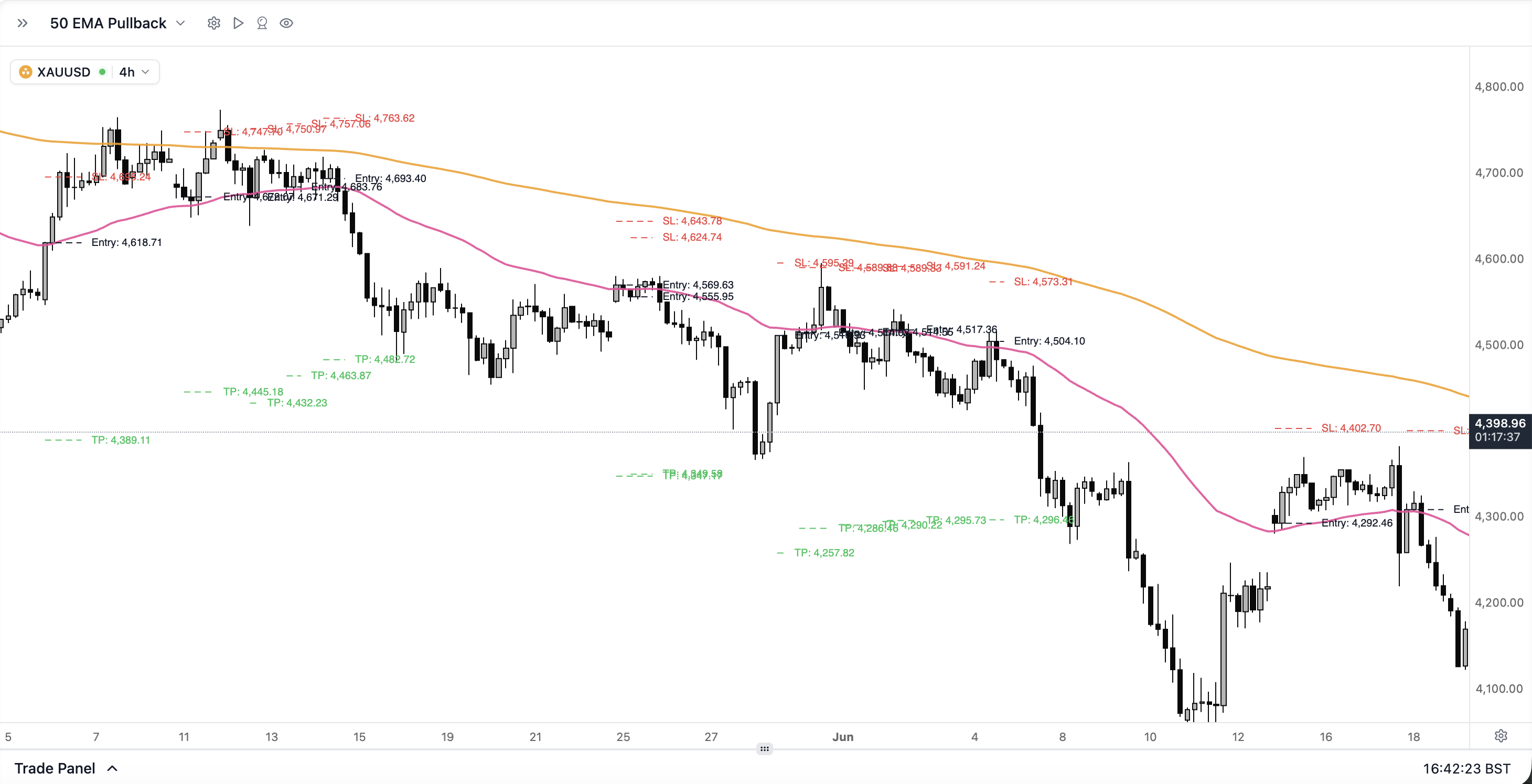
Two averages do the work. The 50 EMA is the near-term path price travels along; the 200 EMA is the long-term tide. While the 50 sits above the 200, the market is in an uptrend and Bowstring will only look for longs.
Both lines are drawn on your chart, so the regime is never a hidden state — you can see at a glance which side the playbook is allowed to trade.
Buying the reload
Inside an uptrend price does not travel in a straight line — it stretches away from the 50 EMA and springs back to it, like a bow being drawn. Bowstring waits for that return: when price comes back within touching distance of the 50, the trend is reloading and the entry fires.
The touch tolerance is deliberately tight. A near-miss is not a touch, and demanding a genuine return to the line is what separates a pullback from a drift.
The settings that matter
Pullback Tolerance is the quality dial — how close to the 50 EMA price must come before it counts as a touch, measured in ATR so it adapts to volatility. Tighter demands a cleaner pullback and takes fewer, better trades.
Cooldown Bars is the evidence dial: a long touch can hover around the line for several bars, and the cooldown stops one visit firing repeatedly. The two pull in opposite directions, which is exactly what makes them useful together.
Prefer to stay in control? Let Timo AI track the session, highlight live setups, and you execute the trades yourself at the click of a button. Want it fully hands-off? Turn on the auto playbook and Timo will handle entries, exits, and risk management for you.
Disclaimer
The information and publications are not meant to be, and do not constitute, financial, investment, trading, or other types of advice or recommendations supplied or endorsed by Timo. Past performance is not indicative of future results.