Elasticby Timo
About this playbook
Elastic — the two-sided fade, stretched and released.
Measuring the stretch
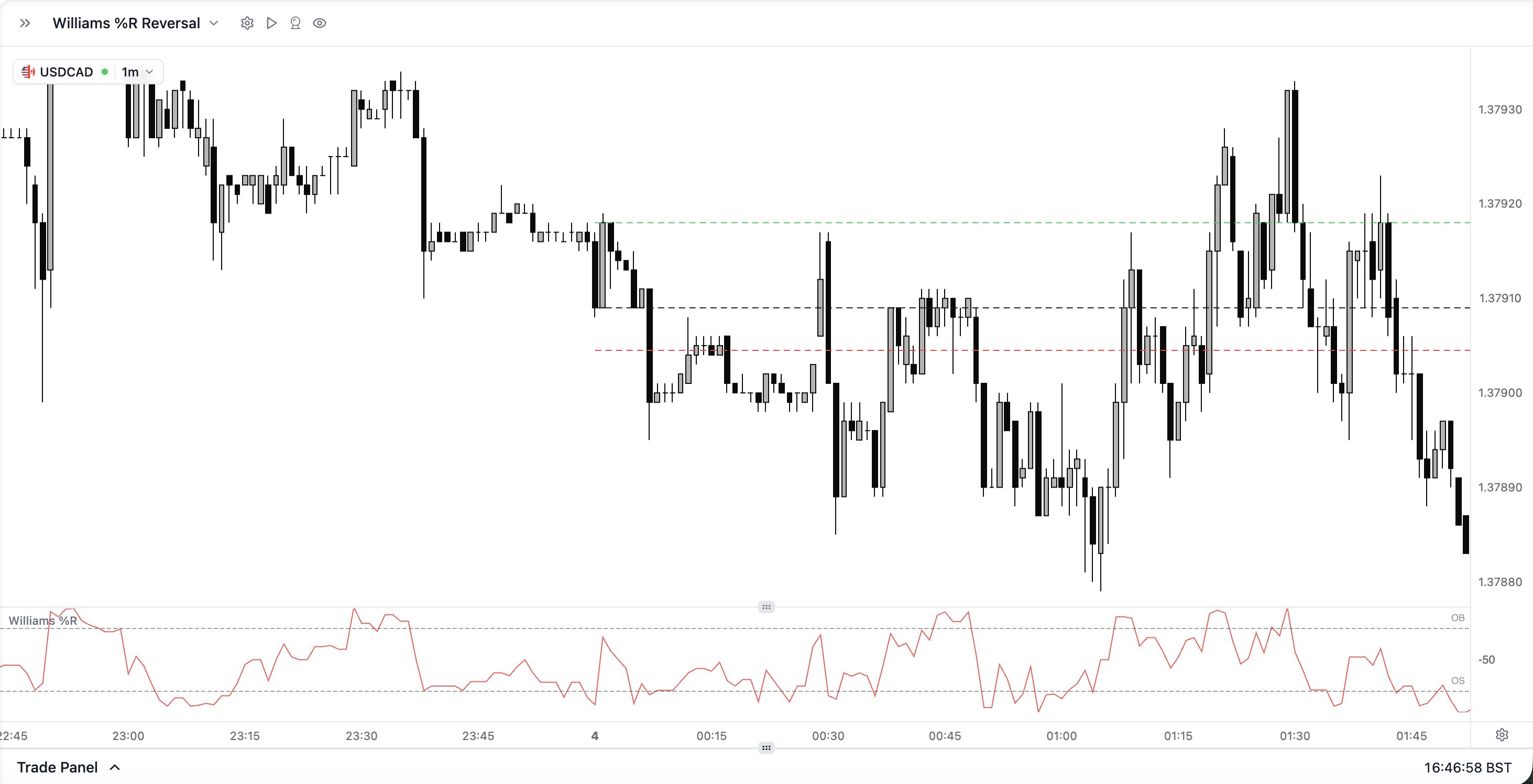
Williams %R asks a simple question: where is price sitting inside its recent range? Near the bottom and the market is oversold; near the top, overbought. It is a pure stretch measure, drawn in its own panel beneath the chart.
Elastic trades both ends of that reading rather than picking a side, so it works in markets that oscillate rather than trend.
Fading both ends
When the oscillator drops below the oversold level, Elastic buys the expected bounce. When it pushes above the overbought level, it sells the expected fade. The ATR stop sizes itself to current volatility, and the target is a fixed multiple of that risk.
A one-trade-per-day cap keeps it from stacking positions in a market that stays stretched — the single most common way a mean-reversion idea goes wrong.
The settings that matter
The oversold and overbought levels are the dials — how far price must stretch before you are interested. Pushing them further out takes fewer, more extreme setups; pulling them in trades the smaller wobbles too.
The lookback period sets what "recent range" means, and the ATR stop multiple and target R:R shape the risk on each trade.
Prefer to stay in control? Let Timo AI track the session, highlight live setups, and you execute the trades yourself at the click of a button. Want it fully hands-off? Turn on the auto playbook and Timo will handle entries, exits, and risk management for you.
Disclaimer
The information and publications are not meant to be, and do not constitute, financial, investment, trading, or other types of advice or recommendations supplied or endorsed by Timo. Past performance is not indicative of future results.