Snap Backby Timo
About this playbook
Snap Back — statistical mean reversion, the z-score way.
Measuring the stretch
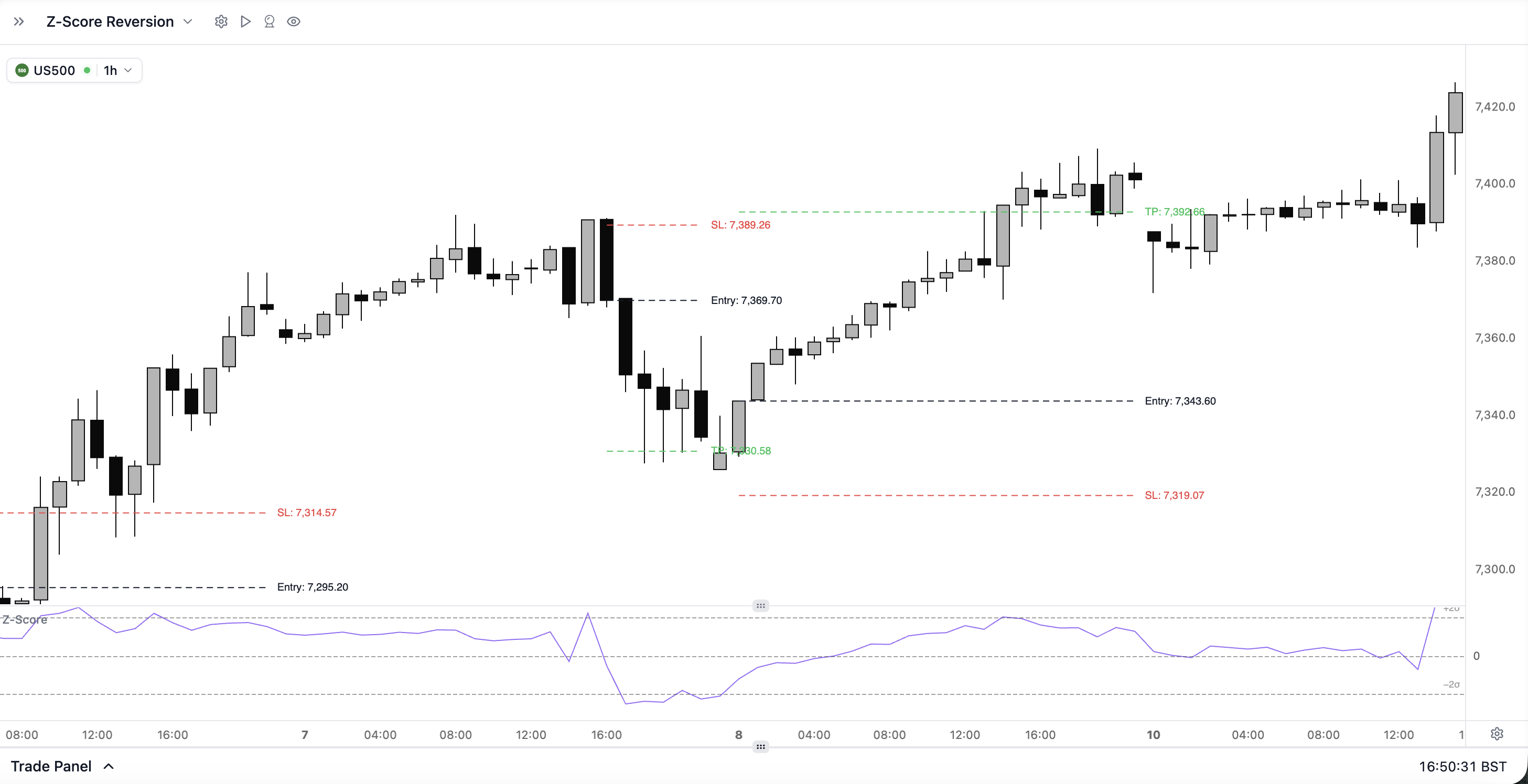
A z-score asks how unusual the current price is compared with its own recent behaviour, measured in standard deviations. Two deviations from the mean is the same boundary a Bollinger Band draws — this is the statistical twin of that idea, expressed as a number rather than a line.
Because it is normalised, the reading means the same thing in a quiet market as in a volatile one, which a fixed-distance measure never could.
Trading the snap
A stretch to the downside is bought and a stretch to the upside is sold, on the expectation that price reverts toward its mean. It is a two-sided playbook with no directional bias at all.
The ATR stop scales with volatility, and the entry cutoff keeps positions out of the late session where a stretch is more likely to be the start of a trend than the end of one.
The settings that matter
The z-period sets what "normal" means — the window the mean and deviation are measured over. Shorter makes it twitchier and more reactive; longer makes it demand a genuinely unusual move.
The entry cutoff bounds the session, and the ATR stop multiple with the 2R target shapes each trade.
Prefer to stay in control? Let Timo AI track the session, highlight live setups, and you execute the trades yourself at the click of a button. Want it fully hands-off? Turn on the auto playbook and Timo will handle entries, exits, and risk management for you.
Disclaimer
The information and publications are not meant to be, and do not constitute, financial, investment, trading, or other types of advice or recommendations supplied or endorsed by Timo. Past performance is not indicative of future results.